Sunday, April 15, 2007

The New York Trilogy

Book 5: City of Glass
Book 6: Ghosts
Book 7: The Locked Room

by Paul Auster

Originally published as separate books, the three novellas have since been bound together within a single volume known as The New York Trilogy. Since I have in my possession the 1st edition Penguin paperbacks, I’m listing them as separate entities (jackpot!). Unfortunately, I wasn’t able to find the original paperback covers of my 3 books on the web and thus, am making do with what's currently displayed.

Wikipedia’s plot introduction for 'The NY Trilogy' begins with: Ostensibly presented as detective fiction, the stories of The New York Trilogy have been described as "meta-detective-fiction"; "anti-detective fiction"; "mysteries about mysteries"; a "strangely humorous working of the detective novel"; "very soft-boiled"; a "metamystery"; "glassy little jigsaws"; a "mixture between the detective story and the nouveau roman".

If anyone’s familiar with Martin Amis, Don DeLillo, etc etc, ‘The NY Trilogy’ definitely wins the “meta-fiction” stamp of approval, as the author subtly (but more often not so subtly), insinuates himself into the narrative, and adds layers of internal/external references and clever complexity into each story.

But don’t let these Literary Labels fool you. Even if you find this meta self-reflexive stuff boring (as I sometimes do), or you don’t much like Auster’s later work, the stories in ‘The NY Trilogy’ are surreal, playful little gems. If you’re into detective fiction and postmodern lit, you’re in for a treat. But even if you tend toward the classic hard-boiled genre, and not so into the meta- self- post-whatever, the stories are short enough and fascinating enough to draw you into Auster’s strange and eerie world.

All three stories are distinct from each other, but thematically linked together, with a few of the same 'characters' weaving in and out. Like film noir, the stories start off in a harmless enough, even wisecracking, tone. But eventually the main character's identity unravels, and the protagonist sinks deeper n' deeper into whatever obsessive morass he got himself into in the first place, and ends up in a nihilistic hole he can't get out of.

The first volume, City of Glass, was adapted in 1994 into a critically acclaimed experimental graphic novel by Paul Karasik and David Mazzucchelli, which was subsequently published as City of Glass: The Graphic Novel in 2004. I saw some sample panels on the web and the images looked very compelling; I’d be very curious to check this out too.

Wednesday, April 11, 2007

Book 4: Catlore

by Desmond Morris

If you’re a cat owner/lover, you’ve probably observed plenty of fascinating feline behaviour and wondered how much of it's due to nature or nurture.

As you know, Morris is known (in book and TV form) for his work on 'The Naked Ape'. 'Catlore' is like its feline equivalent where it attempts to tackle some serious questions that cat lovers have been asking since the Dawn of Kitty Domestication.

The book is structured into many short and digestible chapters, where each chapter deals with such common feline questions as:

>> How Do Cats Purr?

>> Why Do Cats Sulk?

>> Why Do Cats Sometimes Reject Their Food?

As you can see, the chapter names can be quite entertaining in themselves, for example:

>> Why Do Cats Interfere When Their Owners Are on the Telephone?

>> Why Do Cats Suddenly Make Mad Dashes Around the House?

>> Why Are Cats Attracted To People Who Dislike Them?

>> Why Do Some Cats Hate Men?

The book also deals with some more serious issues, such as feline history and health:

>> How Has Domestication Changed the Cat?

>> What is the History of the Tabby Cat?

>> Is it Cruel to Have a Cat Declawed?

>> How Does Being Neutered Affect a Cat’s Behaviour?

What's more, 'Catlore' is the sequel to the original 'Catwatching', which is just as engaging and informative, if not more.

So, if you’re still curious about quirky or conventional, but seemingly inexplicable, feline behaviour such as:

>> Why Do Cats Eat Grass?

>> Why Do Cat’s Eyes Glow in the Dark?

>> Why Does a Cat Tear at the Fabric of Your Favourite Chair?

>> Why Do Cats Keep Crying to Be Let Out, Then Cry to Be Let In Again?

Then this book is also for you!

Monday, March 12, 2007

Book 3: Mona in The Promised Land

By Gish Jen

A Xmas present from Conan’s mom (no, not this past Xmas but from the one before), and it’s finally taken me this long to get around to reading it (sorry to keep you waiting, Caroline).

MITPL starts off as a coming-of-age tale about a second-generation Chinese girl growing up in the large Jewish community of Scarshill, New York during the late 1960’s (like the author herself did). The protagonist Mona is constantly trying to balance pleasing her traditional parents while figuring out her own sense of self, an all-too-common theme in Asian-American literature. Jen adds a humourous twist by having the teenaged Mona, as part of her identity-searching, convert to Judaism early on in the story much to her family’s dismay and exasperation.

I found the novel difficult to get into at first, mainly because I found Jen’s style somewhat distracting (as if trying a bit too hard to be quirky & charming) and self-conscious in that stream-of-consciousness way of trying to create a flowing narrative using poetic-prose.

I felt Maxine Hong-Kingston had already explored this type of storytelling mode (with more success) when she used Walt Whitman as a muse for her free-style 1989 novel, Tripmaster Monkey, which featured the irreverent Wittman Ah Sing, a 23 year old fifth generation Chinese-American college-graduated wandering hippy. For me, MITPL was a bit like Jen’s ambitious answer to Hong-Kingston's novel, which also takes place in the 1960’s but in San Francisco. It’s been over a decade since I read Tripmaster Monkey, but I couldn’t help comparing the two, which share some similar traits and themes.

So those were the hurdles I was facing at the beginning, but nevertheless I plowed on and eventually, I got used to Jen’s style (or perhaps Jen’s style has finally settled down a bit) and got into her story, which did become genuinely quirky and charming, with an expanded cast of interesting side characters.

And there were many occasions where I identified with Jen’s comic observations of growing up Chinese in North America, although ironically, I never felt I could truly identify with the character of Mona, mostly because Jen would avoid exploring Mona’s emotional interior for very long. Perhaps this was Jen’s way of rendering Mona as a kind of cipher (the story is also told in third person), but to me, this is counter-productive for a coming-of-age tale. For example, when Mona suspected her boyfriend Seth of cheating on her with her friend Barbara, I wasn’t sure whether she was actually upset or trying to bury her feelings. When Mona was attacked and practically sexually assaulted by a stranger then rescued by said boyfriend, I didn’t get the impression that she was very disturbed about the incident afterwards.

Overall, MITPL ended up being a light funny clever read, with some good laughs. What’s more, reading Jen’s book now makes me want to revisit Tripmaster Monkey again.

-------

Below is a link to a brief Salon review which sums up my experience of the book almost to a tee:

http://www.salon.com/sneaks/sneakpeeks960517.html

Monday, February 12, 2007

Book 2: About A Boy

By Nick Hornby

Like High Fidelity, the only other Hornby book I've read & reviewed, I'd already seen the movie adaptation first. And like High Fidelity, I quite enjoyed reading About a Boy too, and couldn’t help thinking what a good job the filmmakers (the Weitz brothers) did in capturing the spirit and humour of the original novel. And again, like Hi Fi, reading the book was like picturing the movie all over again (and I didn’t have to convert American accents to British ones!)

A surprise treat was that the ending of the novel was completely different from the movie version. Instead of the school music concert where the boy, Marcus, performed a wincingly painful a capella rendition of “Killing Me Softly” for his suicidal mum, Marcus and his rebellious friend Ellie embark on an ill-fated train trip to visit his Dad. This culminates in a rather farcical situation which has all the adult characters gathered at a police station of a small town to retrieve their troublesome kids.

In some ways, I prefered the final act of the movie version, since it focused exclusively on the relationship dynamic of the three main characters: Wil, the boy Marcus, and his mother Fiona. And to be honest, it also had more of a comedic and dramatic arc (better for a Hollywood movie I guess). On the other hand, the novel’s ending involved several side characters and took place in a completely new setting, which seemed to dilute the story arc and relationship focus between Wil, Marcus and Fiona.

In any case, it was still a treat to read Hornby’s novel from beginning to end. About A Boy wasn’t as cleverly sardonic as High Fidelity, but nevertheless, it had better character development and an actual narrative with the “just right” touching moments you’d expect from a man-boy buddy story, without the sentimental clichés.

Tuesday, February 06, 2007

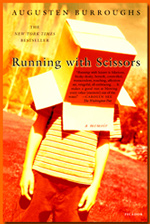
Book 1: Running With Scissors

By Augusten Burroughs

Needed something light for the flight home from my Xmas holiday in Vancouver. So at Lawrence’s used bookstore, I picked up this “hilarious childhood memoir” that has adorned the NYTs bestsellers list and been made into a Hollywood movie (which I heard had made some critic’s list of the one of the Worst Movies of 2006). Despite that, the book ended up being quite enjoyable, and helped pass a good chunk of my 5+ hour flight.

Burroughs grew up in small-town Massachusetts with a distant, alcoholic father and a crackpot mother with delusions of poetic grandeur. His parents inevitably divorced, and in the turmoil, he got legally adopted by his mother’s psychiatrist, the highly unorthodox Dr Finch, who may or may not be as deranged as some of his patients, if not more.

Thus the 12-year-old journal-keeping Burroughs came to live in the disorderly, dilapidated Victorian mansion with Dr Finch’s bizarre family comprised of his wife, two daughters, an absent adopted son, and an obsessive-compulsive patient who has never left her guest room since she stepped in two years previous.

Yup, “Running with Scissors” felt very much like a Wes Anderson film with some “One Flew Over the Cuckoo’s Nest” thrown in. You can see why Hollywood wanted to adapt this, as the cast of colourful characters ranged from the charmingly eccentric to the psychotically bananas. At times, it was a little hard to believe that every significant person in the author’s young life was some sort of unconventional oddball or nutcase. Even if some of the events were slightly exaggerated, still, you can’t make up some of the shit that went down in the Finch household (no pun intended).

The memoir covered a span of 4 years or so and comprised of very selective, yet cohesively narrative, vignettes. The tone was always kept somewhat light and casual, so you never felt like you could really get inside the author’s head of how it must have felt to have insanity rip your family apart.

Interestingly, Burroughs barely went to high school, but you can recognize that he nevertheless had a natural flair for writing and a sardonic wit. His editors must have had a field day correcting his spelling and grammar (why bother with learning such mundane things at school when you’re growing up in such a surreally entertaining environment). Although "Running With Scissors" didn’t exactly explore the depths of human emotions, it was ultimately a very good read with some touching, memorable moments.

Thursday, January 25, 2007

Year End Wrap Up – 15 Books for 2006! aka Better Late Than Never!

Great year! I exceeded my goal of reading slightly more than 1 book every month. For some reason, I lost steam after October with nothing read for the remaining year (although I started several books, none of them grabbed me enough to finish by year’s end.

Book 14: Kafka On the Shore

By Haruki Murakami
(Translated from Japanese by Philip Gabriel)


Mostly agree with dsgran’s summarized review of the same book see Book 7, except I wouldn’t call it a great book, per se, although it definitely had some great moments. Not as satisfying as The Wind-Up Bird Chronicle, disappointing in its unevenness and loose ends, and kind of lame in resorting to the clichéd device of “raining fish” (á la Magnolia). I also did not quite buy the March-November-Harold-and-Maude romance. Nevertheless, I kept getting drawn into Murakami’s surreal flights of unpredictability and the fascinating characters, such as the strangely androgynous Oshima and the cat-man Mr. Nakata. And then before I knew it, I finished the book!


Book 15: Necessary Betrayals

By Guillaume Vigneault


Picked this one up at the library after noting a decent review of it a while ago. It’s the debut novel of a young writer who lives and works as a bartender in the Plateau, the uber hip neighbourhood me & olman live.

Sadly, the book wasn’t so hip and it didn’t have much to do with living in the Plateau, or even Montreal, for that matter. Most of it takes place in the States because two brothers decide to go on a road trip and pick up a young woman along the way.

The older brother is old, not because he’s in his 30’s, but because he’s all washed-up due to some tragic event in his past. So he broods a lot while his younger brother is impulsive and slightly nuts. The woman is annoying because she is young, beautiful and hot, but she’s also surprisingly deep and smart. Of course, she has a big heart too because she falls in love with the older, washed up brother instead of the younger, wilder one even though she had sex with the younger one first, but it didn’t mean anything.

Ok, I think you’ve heard enough. This book pretty much felt like it was written by a bartender in his early-twenties who lives in the Plateau. It’s just too bad this one in particular had to be my last book for 2006.

Tuesday, September 19, 2006

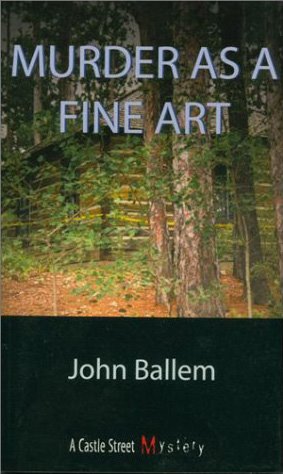
Book 13: Murder As a Fine Art

By John Ballem

This was read in August. I originally got this book for my dad since he enjoys reading mystery thrillers, plus I was still living in Banff and working at the Banff Centre for the Arts at the time. And I read a review saying that Ballem does a very good job of recreating the intimate community of artists doing short-term residencies in the famous artist colony. So I thought that this would give my dad a bit of an idea of what my experience was like, at least with hobnobbing and collaborating with artists at the Centre… not the part with psycho-killers and grisly murders!

However, other than prima donnas spazzing out, flamboyant egos clashing, and the worse thing of all, having to endure bad performance art every now and then… and believe me, there were some atrocious ones, and usually those ones make the headlines (there was once an artist from Mexico City who apparently masturbated at various well-known locations in the town of Banff, then presented the results of his work by carting around a dozen or so test tubes of his semen along Banff Avenue). So yup, other than that, there was never anything as exciting and dramatic as a juicy murder.

Anyway, I’m really too lazy to write a concise review of the novel (it took me over a month to get off my ass to even write this), so I’m quoting this excellent one from: http://gauntlet.ucalgary.ca/story/8198

"The novel opens with the discovery of Alan Montrose, who has fatally fallen down a flight of stairs in the Banff Centre for the Arts. Even though the death is classified as an accident, visual artist Laura Janeway becomes suspicious. Laura uses her keen sense of observation to work with the authorities to discover the truth, especially after a second death comes into play. Yet when she discovers a motive, she must dispel the suspect's air-tight alibi. It is obvious Ballem has a great knowledge of Banff and the Banff Centre. His accuracy not only allows those who have been to Sulphur Mountain or the Upper Hot Springs to mentally retrace their trip, but also includes those who have never seen Banff themselves. Ballem's use of details effectively illustrates the text and at the same time does not slow the book's pace. The characters are well developed and well described. Each character's individual art form is well researched and gives a sense of variety in the Centre. However, there are a few instances when Corporal Karen Lindstrom, the Mountie heading the investigation, and Laura Janeway appear to be the same person. This leads to some confusion."

So reading about psycho-killers and dead bodies, well, gave a slight whiff of unreality. At times I really had to force myself to suspend my disbelief, saying there’s no way that would ever happen at the Banff Centre, no matter how loopy the artist is! Nevertheless, Ballem did such a good job capturing the non-dramatic stuff this ultimately made a very enjoyable read with a fairly surprising, but kind of unlikely, twist at the end. For anyone who enjoys a decent mystery thriller, who wants to get a feel for what life is like being a residency artist at the BCFTA and being out n’ about in the town of Banff, then this book is worth checking out. Parts of it really took me back to those good ol’ days.

Thursday, August 17, 2006

Meezly's Trip to Vietnam


Finally, what everyone has been waiting for, hehe...

vietnam gallery

...

Sunday, August 13, 2006

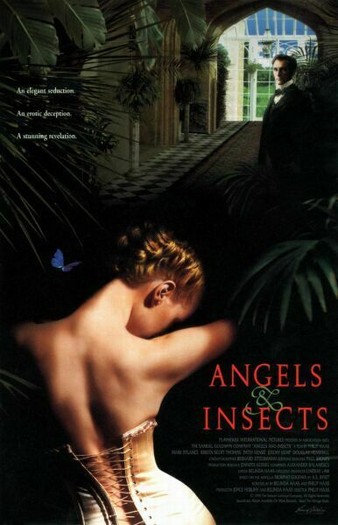
Book 12: Angels & Insects

by A.S. Byatt

Two novellas are found in this book, “Morpho Eugenia” (what the film Angels & Insects is adapted from) and “The Conjugial Angel”. I sought this out for the former, but frankly, couldn’t get through the latter, despite its cool subject matter: a motley circle of mediums and what they discover in the course of their semi-regular séances.

I’m not an A.S. Byatt fan, as this is the first book I’ve read of hers. But I do have a romantic fondness for 19th century natural science, the era that spawned Charles Darwin, so I naturally sought this work out. And it really delivered what I was hankering for. Byatt is really masterful at what she does, recreating the culture, language, aethetics and mindset of the Victorian period. There are beautiful passages detailing how the protagonist, an English naturalist, is esconced in the categorization of his benefactor’s animal and plant collection, his explorations and discoveries when he takes to long walks in the English countryside:

"His journal was for the first time alive with a purposeful happiness. He began also to collect insects, and was amazed to discover how many hundreds of species of beetle existed in a few square miles of rough moorland. He haunted the slaughterhouse, making notes on where the blowflies preferred to lay their eggs, how the maggots moved and chewed, the swarming, the pullulation, a mass of mess moved by an ordering principle. The world looked different, and larger, and brighter, not water-colour washes of green and blue and grey, but a dazzling pattern of fine lines and dizzying pinpoints, jet-black, striped and spotted crimson, iridescent emerald, sloppy caramel, slime-silver."

The story was also excellent, as I was surprised to find multiple complex and interesting themes and subplots woven into this dense, well-crafted 200 –page novella. Byatt’s obviously a big fan of Darwin, and she doesn’t disappoint in how she capably manages to integrate his evolutionary theories into, yes, a Victorian bodice-ripper. "Morpho Eugenia" deals with the Victorian obsession with Darwinian theories of breeding and sexuality, the parallels between insect and human society, the capture and taming of nature, and the age-old philosophical debate between religion and science. Heavy themes indeed, but hardly tedious at all. What distinguishes this story for me, is that these themes still ring true today, particularly the rift between those who believe in the comforting solace of divine design and those who understand and accept the pandora’s box of natural selection.

The character that portrays the religious side is Harald Alabaster, who’s struggling to write his magnum opus, “the kind of impossible book everyone now is trying to write. A book which shall demonstrate – with some kind of intellectual respectability – that is not impossible that the world is the work of a Creator, a Designer.” Alabaster is an intelligent, even wise, old man who once had his own radical views of evolution: “If I were a young man now, a young man such as you, I would be compelled towards atheistic materialism by the sheer beauty, the intricacy, of the arguments of Mr Darwin…” But now in his twilight years, he feels a desperate need to find some kind of meaning.

On the other hand, the protagonist, William Adamson, is a young naturalist who has accepted a creator-less universe. At Alabaster’s request, he’s invited into his study to read his drafts and play the devil’s advocate. Because Alabaster is also Williams’ benefactor, the naturalist has to bite his tongue at times:

William sat down in his father-in-law’s chair and tried to make sense of it, with mounting irritation. It was a new rehearsal of old arguments, some of which Harald had already, in conversation, rejected as untenable.

“… It may be an emotional deficiency in myself, Sir, that I cannot feel the strength of the argument. I have been much changed by the pattern of my life, of my work. My own father was very much in the image of a terribly Judge, who preached rivers of blood and destruction, and whose own profession was bloody too. And then the vast disorder – the indifference to human scale and preoccupations – in the Amazon – I have not been left with a propensity to find kindness in the face of things.”

Ah, the stuff of genius!

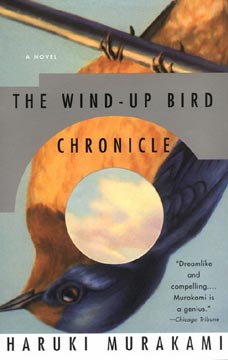
Book 11: The Wind-Up Bird Chronicle

by Haruki Murakami
(translated from Japanese By Jay Rubin)


I finally finished reading TWUBC back in June after my return from Vietnam, and for my first Murakami novel, it was a surprisingly rich and rewarding read. I didn't know anything about the author, only that he’s a well-regarded “Gen X” writer in Japan and he must have a decent following because I had some trouble finishing the library copy of this book because other people kept placing holds on it!

The novel begins by introducing the daily routine of recently unemployed Toro Okada. While his wife, Kumiko, goes to work during the day, Toro runs errands, makes lunch, reads, takes a nap, and prepares dinner for his wife’s return. The only conflict is that Toro and Kumiko have just lost their cat, and once in a while, Toro gets the odd strange phone call from an unknown woman. Other than that, nothing much happens.

Then Kumiko arranges for Toro to meet with a charismatic psychic to help them find their cat. And Toro starts to take walks around this neighbourhood, partly to search for the missing cat and partly to explore the abandoned house down the back alley. From there, various characters are introduced, and through their seemingly random histories, the novel expands into a multi-layered tale of near-epic proportion where we go back and forth between present-day Tokyo, the Mongolian front, a Soviet prison camp and a Shanghai zoo during WWII, as well as explorations into the subconscious netherworld of the protagonist’s mind. Before you know it, this self-effacing slacker embarks on a heroic quest to save his loved one!

The best thing about the book is that even though it quite capably juggles a confluence of Japanese history, personal tragedies, magic realism, the supernatural, operatic influences of The Magic Flute, not to mention over 600 pages of text… elements which contribute to an epic novel, the author still imbues a very subtle, low-key atmosphere. I hate to sound clichéd, but I find the approach zen-like, very Japanese, yet still familiar to the western reader. The only critique I had was the device of the wind-up bird to "tie things together", the only element which I found a bit too contrived.

Reading TWUBC was like watching a film by Ozu and Jarmusch. There’s a tension between reality and unreality; there’s a real-ness to Toro’s unassuming life, in how people go in and out of it, and a disconnected style to the writing and how the characters speak when describing bizarre events. So when things get progressively more surreal and Lynchian, it also seems to happen in the most normal and natural way. The protagonist, especially, has a sense of quiet acceptance and distance, even when he discovers there’s more to his slacker persona than he realizes. Like dsgran’s review, I appreciated how the story didn’t explain too much, like what exactly was the nature of Kumiko and her brother’s strange power? It made for a more interesting and enigmatic read. I’ll definitely be reading more by this author.

Friday, August 04, 2006

Otto... part cat, part sea otter!

Why dontcha take a load off, little buddy...


Monday, June 26, 2006

Book 10: High Fidelity


By Nick Hornby

I must say, this was a brilliant find at The Word bookstore. I was looking for a light, undemanding read for my upcoming trip to Vietnam, and there it was, in perfect paperback condition, for only $6! Usually, due to my packrat tendencies to cherish things which give me pleasure, I hold on to books that I’ve thoroughly enjoyed, to revisit eloquent passages, to lend to others, to maybe even save for a future re-read.

So I was sadly reluctant to leave Hi Fi behind in Hanoi for my host, Seb, who expressed interest in reading it. How could I refuse someone who provided me free, comfortable lodging for a full week? Sigh. Besides, “High Fidelity” is the kind of poignantly funny book that’s meant to be shared, because it will frivolously enrich other people’s lives just as it frivolously enriched yours.

If you’ve seen the movie and read the book, you’ll see how the movie version is one of the best adaptations of a novel in cinematic history, despite the fact that the film producers had replaced the very English Crouch End setting with the very Americanized one of Chicago, Illinois. Reading the novel was a lot like watching the movie all over again, and more, because you get the itty bitty novelistic gems a movie normally glosses over, such as the brilliant term “snob obscurantist”. What’s more, by reading the novel, you get to experience the original droll British wit. By the same token, the movie did capture a good chunk of the book’s subtle, but all-important gemmy little details, and most significantly, it faithfully captured the novel’s humour, insight and spirit.

Anyway, we all know the premise of “High Fidelity”, so I won’t bother with a plot summary. What I will say is that what I most appreciate about Hornby’s novel are its sly jabs at people with bad, aka populist, taste. If you’ve ever been a bit of a snob about anything, esp. music, and have visited many a friend, or a friend of a friend’s home, you may have had many of the following experience:

"So I wander over to the shelf, and turn my head to one side and squint, and sure enough, it’s a disaster area, the sort of CD collection that is so poisonously awful that it should be put in a steel case and shipped off to some Third World waste dump. They’re all there: Tina Turner, Billy Joel, Kate Bush, Pink Floyd, Simply Red, the Beatles, of course, Mike Oldfield (Tubular Bells I and II), Meat Loaf … "

Brilliant, just fucking brilliant!

Book 9: The Story of the Eye (by Lord Auch)

By Georges Bataille (1928)
Translated by Joachim Neugroschel (1977)

Hopping from the populist genre fiction of Stephen King to a classic of transgressive pornographic literature by Surrealist bad-boy, Georges Bataille… what will Meezly read next?

I’ve been curious about this book since my university days (not because it’s Bjork’s fave book of all time and that everyone should read it. Eeesh.) and it’s exactly the kind of book a liberal arts student would be curious about. Ah, remember that time? when you were young and everything was new and cool and exciting, and you were constantly seeking out works of art and literature that’s shocking and bursts your sheltered middle-class bubble. I don’t actively seek this stuff out anymore, but I was nevertheless pleased to come across a cheap used copy at The Word bookshop.

Originally published in 1928, “The Story of the Eye” is still shockingly obscene today, and still strangely compelling notwithstanding. The no-holds-barred profane attacks against the Catholic Church are definitely the best thing about this book: the money shots, if you will. This short novella is basically about the depraved exploits of two lovers and soul-mates, a boy and a girl, who grow up to be sophisticated libertines.

Their misadventures finally result in death, which force them to flee their native France and seek refuge in Spain, where they hook up with a like-minded older benefactor. The exploits of this bizarre trio finally culminate in a (surprise) Catholic Church where they commit unimaginable atrocities against a very unlucky handsome young Spanish priest. Just when you think the level of depravity has reached its (civilized?) limit, Bataille lays it on even more! The two protagonist-lovers, Simone and the unnamed narrator, make Micky and Mallory look like kindergarten teachers.

I suppose what elevates this work from mere exploitative pap like Natural Born Killers … is the philosophy and passion behind it. You get a very clear idea as to what kind of people they are, and what drives them to commit these inconceivable offenses. Although the narration is stiff at times (could be the translation, and the fact that Batailles is not a great writer), the writing is still laughingly very French:

“I associate the moon with the vaginal blood of mothers, sisters, that is, the menstrua with their sickening stench …”

Mm hmm, right, dude.

Wednesday, April 12, 2006

Book 8: Cell

by Stephen King (2006)

Like Charles Burns’ “Black Hole”, this was a totally spontaneous read. Next up was supposed to be “The Wind-up Bird Chronicle”, but Olman excitedly acquired Stephen King’s latest after being on the library waiting list for 3 weeks. With my inherent mistrust of mass fiction, I was skeptical at first. But Olman informed me of the story’s premise: on a certain day, a strange signal is broadcast. Anyone who uses their cell phone turns into a blathering, rage-filled lunatic who's only purpose is to kill every living thing in sight. In the blink of an eye, civilization is reduced to pure mayhem and soon afterwards, burning stinking rubble. We then follow a rag-tag bunch of survivors and see how they fare amidst the post-apocalyptic desolation and teeming “phone-crazies” who’ve now become zombie-like drones with a strange hive-like mentality…

I knew then I had to see what this post-apoca-zombie book had in store for me. Luckily, Olman has been so immersed in his bande dessinee serials that I was able to jump into “Cell” immediately after finishing “Bee Season”. I had my share of art-house literature, time for some serious kickass horror action!

And boy, “Cell” really delivers. Within a couple of pages, death, destruction and gore are already in full swing, boyee! King wears all the old and new horror movie influences on his sleeves: One Missed Call, Dawn of the Dead, 28 Days Later, Invasion of the Body Snatchers, War of the Worlds, and Land of the Dead. He doesn’t even wince with those post-9/11 references. But he gets away with it because he’s so damn good at what he does. Most importantly, he’s able to build characters that are ordinary, identifiable and compassionate folk who also possess reasoning, intelligence and a good dose of survival instincts. Although the characters are from a range of age, sex and background, my only beef is that they’re all caucasian. But I should’ve known better. King wields total authorial control and every element of his story is accounted when, towards the end of the novel, one of the protagonists remarks, upon witnessing a fair ground full of nearly all-white phone-zombies, that “this is New England after all”.

The novel’s packed full of everything and there was never a dull moment; a real page-turner that kept me up until 3am on Sunday night. There was a section where I didn’t like the way the zombies were going in their “developments”, just a bit too far-fetched for me. But I soon got into it and accepted it as a new twist in the zombie genre. Anyway, I don’t believe I need to say much more. Go and read it, it’s a lot of fun!

Sunday, April 09, 2006

Book 7: Bee Season

By Myla Goldberg (2001)

When I was a kid, I secretly fantasized about being a champion speller. Unfortunately, spelling bees are not granted the same stature and prevalence in Canada as they are in the U.S. It just ain't in our culture. Thus whatever pullulating spelling talents I may've had as a child went forever untapped. So now I spend my adult days vicariously devouring definitive ‘spelling bee’ classics such as the documentary “Spellbound” and Myla Goldberg’s debut novel “Bee Season” (I'm joking really).

I initially thought “Bee Season” was going to be a charming, coming of age tale about an unremarkable Jewish girl who finds her true calling as a spelling bee champion. But Eliza’s sudden, unexpected rise to spelling stardom occurs early on in the novel, and serves as a catalyst for the gradual disintegration of her close, but precariously balanced, family unit.

The author thoughtfully explores the themes of human relationships and spirituality. The spelling bee becomes a metaphor for life’s double-edged sword as each family member embarks on a self-fulfilling search for spiritual meaning… or is it really an inexplicable psychological need to fill their emotional and existential emptiness? In this way, the book was much darker than I anticipated, but it’s nevertheless a fascinating and lyrical portrayal of a contradictory and eccentric family of outsiders.

However, what I enjoyed best about the novel is its portrayal of behind-the-scenes spelling bees. In a single paragraph, Goldberg conjures up the fleeting microcosm of the national championships with elegance and humour:

" The press arrive on Friday morning. In each press kit, spellers are listed by number, their names and vital statistics printed below their photos. They come from Neptune, New Jersey; Gallup, New Mexico; and Kokomo, Indiana. They come from Fairbands, Alaska; Naples, Florida; and Rome, Georgia. Their local papers featured them in last Sunday’s human interest column. Between them they have 276 siblings, 89 dogs, 54 cats, and 108 fish. Sixty five have dreamed of accidentally attending Friday’s competition in their underwear. Forty four have churches praying for them. Twenty nine have been constipated for the past two days. Twelve are afraid of vomiting onstage. Five have been wagered upon by overconfident parents.
One will win."

Then there are the wonderful passages describing Eliza’s innate gift, from upstart speller to jedi knight, as her kinship with letters goes beyond mere rote memorization. With her father’s guidance as a Judaic scholar and his library of sacred texts, Eliza learns to decode language itself as her study and encantations of the alphabet take her deeper and deeper into the realms of cabbalistic mysticism. It’s pretty heady stuff.

I end this with one of my favourite excerpts from “Bee Season”:

"Paging through the dictionary is like looking through a microscope. Every word breaks down into parts with properties – prefix, suffix, root. Eliza gleans not only the natural laws that govern the letters but their individual behaviors. R, M, and D are strong, unbending and faithful. The sometimes silent B and G and the slippery K follow strident codes of conduct. Even the redoubtable H, which can make P sound like F and turn ROOM into RHEUM, obeys etymology. Consonants are the camels of language, proudly carrying their lingual loads.

Vowels, however, are a different species, the fish that flash and glisten in the watery depths. Vowels are elastic and inconstant, fickle and unfaithful. E can sound like I or U. –IBLE and –ABLE are impossible to discern. There is no combination the vowels haven’t tried, exhaustive and incestuous in their couplings. E will just as soon pair with A, I, or O, leading the dance or being led. Eliza prefers the vowels’ unpredictability and, of all vowels, favors Y. Y defies categorization, the only letter than can be two things at once. Before the bee, Eliza had been a consonant, slow and unsurprising. With her bee success, she has entered vowelhood. Eliza begins to look at life in alphabetical terms. School is consonantal in its unchanging schedule. God, full of possibility, is a vowel. Death: the ultimate consonant."

Wednesday, March 22, 2006

Book 6: Time’s Arrow

By Martin Amis (1991)

This is probably my third Martin Amis book. I was curious about Time’s Arrow mainly because it’s known as his “backwards” novel. Using Memento-style reverse chronology isn’t exactly an original literary device, as writers such as JG Ballard and Philip K Dick (faves amongst you 50-bookers) have used this gimmick in earlier works. But unlike them, this backwards novel was short-listed for the Booker prize.

As I’ve been meaning to read this book for several years, I had mostly forgotten what the premise was about, which was a good thing. The original title was supposed to be “The Nature of the Offense” and the story begins with the awakening of an old man in a U.S. hospital surrounded by doctors. From there, the reader quickly grasps that the novel is starting from the protagonist’s death and moving backwards in time, and soon learns that this man has been harboring a terrible and long buried secret. As the story regresses through the man’s life, he becomes younger and younger, goes through a couple of identity changes, returns to Europe, WWII is ending... or is it just beginning? And the reverse structure of the book begins to make sense.

Amis takes full advantage of the backwards device to reveal his crafty talents and show off his usual detached and savage irony. He even has a bit of fun sometimes:

The other guy stared at us, with raised, churning face. Then he did some shouting and strode out of there – though he paused, and thoughtfully dimmed the lights, as he left the room. We heard his boots on the stairs. The lady clutched me.
“My husband!” she explained.

Also interestingly was how Amis used the protagonist’s detached soul as the 3rd person narrator for the entire novel except for one section: when we finally arrive at where the nature of the offense took place. Only then does the novel switch to the 1st person. Once the protagonist reaches his younger state of innocence does the novel return to his detached and passive “inner soul” as narrator.

Amis can be known as a cold, pretentious and meta-fictional English writer, but the books I’ve read, like "London Fields" and "Other People: A Mystery", have always managed to surprise me in its twists and provoke some critical thoughts out of me. "Time’s Arrow" has definitely been one of the more interesting reads I’ve had in the past couple of years.

Monday, March 20, 2006

Book 5: Black Hole

By Charles Burns

Olman and I were visiting his sister and brother-in-law this past weekend, and this unusual graphic novel was brought out from a shelf. Right away I was intrigued by the black & white art and the premise of suburban teens in the 1970’s plagued by a horrifying STD that inspires grotesque deformations. I read the entire thing in a single evening.

Here’s a short online review that describes “Black Hole” better than I can at the moment: Black Hole Review

I included this as a 50-booker because “Black Hole” was such a rich and surreal reading experience. It really felt like I had entered Burns’ twisted and hallucinatory world where diseased, outcast teens run rampant in the woods and growing up is like a living Cronenberg-esque nightmare.

Critics liken the strange plague as a metaphor for AIDS, but for me, it’s more like a narrative device to explore the teenage psyche and societal behaviour toward aberrations, which the comic does frighteningly well. Also, the disease doesn’t behave like AIDS and is referred to very vaguely. Once it sets in, the disease doesn’t progressively worsen, or kill its victim. Rather it seems to either transform, or deform, the victim into a mutant-like, almost chimerical, creature.

Saturday, March 11, 2006

Book 4: The Fortress of Solitude

By Jonathan Lethem (2003)

If "Motherless Brooklyn" was a quick compact read, this was not. I had to renew this bloody book twice. Then because my cat died, I was late renewing a third time and the library refused to renew it, as it’s now considered overdue. (see my Rant in wordsmiths) So I said, fuck this, it took me almost 3 months to read this tome, I’ll pay the 25 cents per day until I goddamn finish it!

"The Fortress of Solitude" has everything: epic coming of age tale, homage to a bygone Brooklyn; elements of magic realism, comic book fantasy, multicultural mish-mash, pop culture commentary and social critique. It’s kind of like a Brooklyn-ized version of "White Teeth" (Zadie Smith), or "Midnight’s Children" (Salman Rushdie). However, the core of the novel is the unlikely (yet likely) friendship between a black kid named Mingus and a white kid named Dylan.

Although rich in period detail and mood, I found it overly expository at times. It made for a tough read, especially at the beginning, due to lack of narrative momentum and its mellow chronological pacing. It began with Dylan as a young boy adjusting to a mostly black and Hispanic Brooklyn neighbourhood. Each section was devoted to a grade, or season, of Dylan’s life until he finally reaches high school.

When it dawned on me that every densely paragraphed chapter was going to represent a year of his teenaged life, I knew it was going to be a long haul. But even as I was tempted to skim through expounding paragraphs, there were worthy details I didn’t want to miss. TFoS is the kind of book that’s got enough cool shit that a former-geekboy-turned-hipster reader would perhaps devour and reminisce about.

Take this quote for instance:

Mingus Rude excavated four comic books from the closet floor: Daredevil #77, Black Panther #4, Doctor Strange #12, The incredible Hulk #115. They’d been tenderly handled to death, corners rounded, paper browned by hot attentive breath, pages chewed by eyes.

You can just tell that Lethem loves, even almost fetishizes, this kind of stuff!

And despite being a gawky white kid, Dylan’s privy to the cultural trends of his era. Through him, you get to experience childhood in the 1960’s, a time when kids hung out and played spaldeen on the street. During the adolescent 70’s, the two boys discover the world of comic books (and superpowers, even!). Through Mingus, Dylan gets exposed to hiphop and the delinquent pastimes of shoplifting, getting stoned and territorial tagging. When their friendship becomes estranged, he befriends geeks who memorize Al Jaffe’s Snappy Answers to Stupid Questions and spout lines from Monty Python. Then Dylan goes punk, catching shows at CBGB’s and dealing LSD on the Bowery.

Dylan eventually becomes a music journalist, while Mingus takes the more stereotypical and tragically “black” path via Requiem for a Dream-like descent into drug addiction, crime and prison sentences at Spofford, Riker’s, Elmira, and finally, Watertown.

Highlights in the book are the protagonists’ respective dads. Dylan’s father is a failed artist-filmmaker who fell into painting sci-fi paperback covers for a living. Lethem has a knack for finding humour in the sci-fi subculture, as Abraham Ebdus, much to his chagrin, finds semi-success at what he does, winning Nebula awards and spots as a guest speaker on esoteric panels. The background of Mingus’ father is less thought out. The background of Barrett Rude Jr’s musical career has its own chapter awkwardly inserted near the end of the novel instead of woven through the book. It’s a fascinating rise and fall account, but interferes with the flow of the narrative.

Jonathan Lethem is definitely one of the more original and interesting contemporary writers, and he’s got a wonderful way with words. It’s no easy feat to deftly weave (almost) so many disparate elements together. TFoS is a flawed woult-be masterpiece only because it tries to capture and chronicle so much.

Sunday, March 05, 2006

Remembering Gunther

Rest in peace, little guy...

Feel free to visit his memorial

Monday, February 20, 2006

Book 3: Mrs Frisby & the Rats of NIMH

By Robert C. O’Brien

Yup, following on the coattails of Olman, who was influenced by Jarrett’s review. With 2 co-habitating 50-bookers, this kind of book-sharing was bound to happen!

The book truly delivered – I was instantly caught up in the story & adventure, and read it all up in a weekend. Although the story itself was deceptively simple, I appreciated its deep philosophical themes, which of course, helped to make it an enduring children’s novel. And the adventures! The NIMH backstory was the best part (as in the film), but I especially loved how the rats discover the Boniface mansion and the toy tinker.

As with truly excellent animal stories, there are the recognizable themes of human-animal relationships, ruminations on how different species and/or groups perceive one another, how that makes us think of human society, and how that makes us wonder and hopefully respect the sentiency of other creatures. Yeah, there’s a bit of that anthropomorphizing thing going on. But how else would one deal with the usual “human” themes of love, sacrifice, friendship, honour, courage, knowledge and wisdom?

** spoilers ahead **

Here's a crazy theory of mine. On another level, the Rats of Nimh were like a spiritual metaphor and a warning for humans, especially North Americans in general. The rats were given the gifts of intelligence and longevity by a superior species. They proceed to acquire all of human knowledge and history, but with the potential “blank slate” of a newly created sentient life-form.

For instance, in his quest for knowledge, Nicodemus takes to heart the Rat Race story he read in the library of the Boniface mansion. The story teaches him the dangers that can befall a society in which the lifestyle of its citizens becomes too easy and complicit. As civilization advances, it also gets spoiled by the comforts of convenience and technological progress. Eventually, the rats themselves reach a stage where they can no longer rely on humans. They make a democratic decision to forsake their worldly comforts and possessions in order to take the next step of pure self-reliance (and enlightenment). The rat utopia in Thorn Hill is what human civilization should be striving for.

My only small and very trivial beef with the book is the lack of female rats of Nimh. Surely, out of the 20 rats that were in Group A, some of them would have been female?

But man, when Olman finds the movie-version of the book, you can bet yer bottom dollar I’m gonna be watching it again!